Showing posts with label canine. Show all posts

How to Get Rid of Canine Acne


As humans we experience skin problems like acne at least once in our lives, but what most don't realize is that we aren't the only ones who need attention when it comes to annoying acne. Believe it or not, our dogs also have the tendency to develop what is commonly known as canine acne, a skin problem caused by the blockage of hair follicles due to substances like keratin and sebum that are plugging debris within the pores.

This kind of skin disorder is common among certain breeds, particularly for 5 to 8 month-old English bulldogs, Boxers, Great Danes, Rottweilers and Doberman Pinschers.

So how can you tell if your dog has acne? Dogs that have this kind of skin problem develop multiply blackheads or comedones in areas like the muzzle, lips, and chin. If left untreated, canine acne can develop swellings, scabs, and more blackheads, which normally do not affect the dog unless these develop into a secondary skin infection that could cause irritation, itching, and of course pain. If you think your dog's lips or chin have blackheads and swellings that might develop into a chronic type of skin disease, the best solution is to take him or her to the local vet for treatment.

Unfortunately, most canine acne cases cannot be cured entirely but it can be controlled with proper treatment and medication.
The vet would normally base his or her findings on the dog's blackheads, but for further assurance he or she might perform a skin biopsy on the dog. This is also to ensure that the canine acne isn't caused by more severe problems such as mite infestations (demodecosis), ringworms, puppy strangles, and other allergies that could be causing the blackheads and swelling to develop.

Here are some options for canine acne treatment:

- The vet will usually recommend regular cleaning of the infected areas with anti-acne products such as benzoyl peroxide or mild anti-seborrhea shampoos in order to lessen and rid the dog of the bacteria that causes the plugging of debris within the skin and to remove such debris effectively.

- Antibiotics may be needed and prescribed if the canine acne becomes worse due to secondary skin infections that could cause incessant itching, scratching, and pain on the dog. The antibiotics are usually needed for 3 to 4 weeks, but there is a possibility that a swab test would be required for further observation. Make sure that the medications used are prescribed from a well-rounded veterinarian so as to prevent further pain and damage from happening to your pet.

- Of course, if things have gotten worse and you see your dog scratching endlessly on the infected parts (especially the face), it would be best to use an anti-inflammatory drug, which usually comes in the form of either a steroid cream or injection that will be able to lessen the discomfort your dog feels. Again, consult the veterinarian first before buying these drugs to ensure the safety of your dog's health.

I also recommend you check out products that naturally help to clear up canine acne by working with your dog's immune system. Some of these products will also help to relieve scratching and itching that may develop as a result of the acne.
----------------
Reprinted with permission by Terrie Simpson, www.K9KlearUp.com. Terrie has been involved in the dog world for over 28 years and has achieved numerous awards with her Springer Spaniels in tracking and obedience. Over that time, she has amassed a good amount of knowledge about how to keep a dog healthy. She is now happy to give back by sharing her experience with other dog owners. Get the best of the canine world right to your inbox - Signup today for the K9Kourier weekly newsletter atwww.K9KlearUp.comand receive a FREE 41 minute MP3 download on "Natural Ways To Care For Your Canine".

Understanding A Dog's Heat Cycle


As usual my new puppy is giving me something to write about. This time it is her first heat. By now a new dog owner should have made the decision to breed their female dog or not. Breeding is not a profitable endeavor, therefore it should be done only to propagate a breed of dog.

Having your dog go through the heat cycle is a messy stressful 3 week or more period. A dog usually experiences a heat cycle twice a year after she reaches 6 months of age. In larger dogs the cycle may be every 9-12 months. In some breeds like Basenji's it may only be once a year.

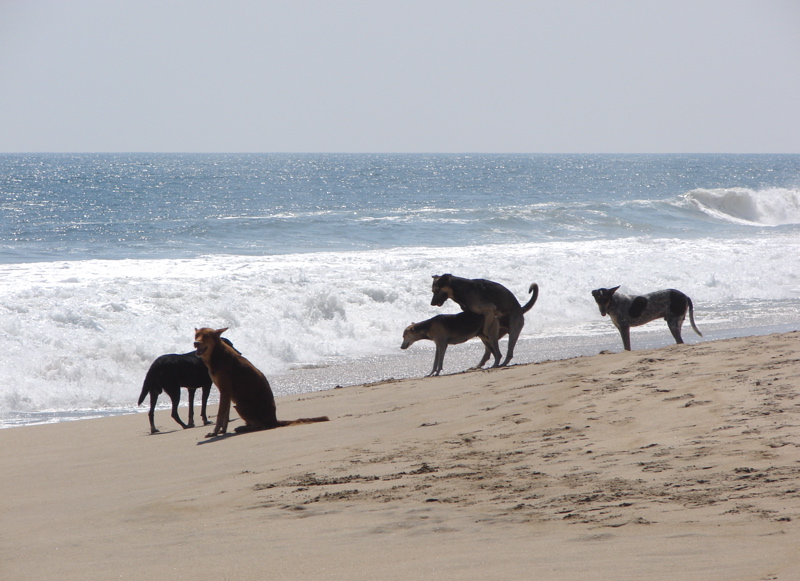
There are four stages to a heat cycle. The first is called Proesterus. The vulva swells and there is a bloody discharge. The bitch secretes pheromones which attract the males. This period lasts about 9 days and the dog will not allow a male to mount her. It has been recommended to me that even though some dogs may wash themselves frequently, to protect my carpet, clothes, and furniture, it would be wise to purchase protective panties and use mini-pads. The second stage is called Estrus. The female still has a discharge, but now she will allow a male to mount her. This stage lasts another 9 -12 days. The third stage is called the Luteal stage. It lasts 2-3 months whether or not the dog is pregnant. Some dogs who are not pregnant will experience a false pregnancy. Their mammary glands swell and will secrete fluid. They get nesting instincts and become possessive of their nesting or bedding area. The last stage is the Anestrus cycle. It is a stage of reduced hormonal or ovarian
activity. It's the calm before the next heat. During this period, if you are not planning on breeding, you should again consider spaying your dog. Always consult your veterinarian and your breeder for a course of action that is best for you and your dog.

Reprinted with permission by Terrie Simpson,

Visit www.k9klearup.com today...

.Terrie has been involved in the dog world for over 28 years and has achieved numerous awards with her Springer Spaniels in tracking and obedience. Over that time, she has amassed a good amount of knowledge about how to keep a dog healthy. She is now happy to give back by sharing her experience with other dog owners.

Get the best of the canine world right to your inbox - Signup today for the K9Kourier weekly newsletter at

Visit www.k9klearup.com today...

and receive a FREE 41 minute MP3 download on "Natural Ways To Care For Your Canine".

Yellow Puppies Blogger Template | Template Design | Elque 2008