When It's Time To Say Good Bye


The decision to euthanize a pet is for most owners a difficult choice. Consultation with your veterinarian will help you make the right choice. Some pet owners are unable to cope with the daily care of an ill pet. The tasks around the care, cleaning, feeding, and expense can build resentment towards the pet and would rob them of happy memories. Some pets are euthanized because of behaviour problems such as aggression and barking. Rather than consult their veterinarian or an animal behaviorist, the owner opts for an easy out. They are focusing on the possibility of law suits or eviction rather than the love for their pet. Healthy dogs are also euthanized because the owners housing situation has changed. The owner finds that they are moving to an apartment where no pets are allowed. Rather than consulting their veterinarian or a pet placement service the owner opts for euthanasia. They either do not feel they can trust someone else to love their pet, have a distrust of the pet
placement services, or do not want the expense and trouble of finding someone to adopt their pet.

We've all heard the phrase "Quality of life, not quantity." When a dog becomes old, or ill, or is in pain, it may be the best and kindest thing to let the pet go in peace and with dignity. Your veterinarian should always be consulted before and during this decision. He/she will know when the time is right for you and your pet so than neither your nor your pet will suffer excessively physically or emotionally.

The act of euthanasia is never as bad as we fantasize. We can choose to be present or not during the actual euthanasia. The shot is painless and many veterinarians will tranquilize the pet before hand as many pets will react to the nervousness of their owners and react likewise. Being with your pet gives you a chance to say your final good-byes and put closure to your relationship. If grief seems unbearable ask your veterinarian for some brochures dealing with loss of pets. Be assured that if you have been consulting your veterinarian all along during your pets life and illness, that you have now made a wise, informative, and correct decision. Be at ease and turn your thoughts to happy memories.

------------------------------------------------- // ------------------------------------------------

Reprinted with permission by Terrie Simpson,Visit www.k9klearup.com today...
. Terrie has been involved in the dog world for over 28 years and has achieved numerous awards with her Springer Spaniels in tracking and obedience. Over that time, she has amassed a good amount of knowledge about how to keep a dog healthy. She is now happy to give back by sharing her experience with other dog owners.

Get the best of the canine world right to your inbox - Signup today for the K9Kourier weekly newsletter at Visit www.k9klearup.com today...
and receive a FREE 41 minute MP3 download on "Natural Ways To Care For Your Canine".

How To Care For a Teething Puppy


It seems that no amount of rawhide bones, nyla bones, or chewy toys you provide will keep a teething puppy from finding something to chew on that they shouldn't chew on. I thought I had learned from experience to provide an abundance of chewy items. I thought I had provided my pup with so many items that it made my nocturnal meanderings a life taking risk. Yet, my pup found, chewed and punctured my tracking boots. Thus providing me with another topic to write about.

Puppies should have a full set of 28 baby teeth by the time they are 8 weeks old: fourteen teeth on each of the upper and lower jaws. During the next five months the baby teeth will be replaced by the adult teeth. There are 42 adult teeth, 21 on each jaw.

If you have a dog that you may be considering showing in conformation, you need to monitor the growth of the teeth ensuring that they do fall out and grow in on time. Like human children, if the baby teeth are not replaced on time it may cause deformities in the adult teeth. A veterinarian may need to extract a tooth so that the other teeth will grow in straight. Sometimes the owner of a dog may help by working on loosening a tooth, much the same way as a child works on loosening a tooth so that the Tooth Fairy comes.

Chewing on items is a form of massaging the gums for puppies. Not only does it reduce discomfort but it also helps loosen a tooth and also helps break the skin on the gums so that a new tooth can come through. Providing ample items to chew on will help. However, be careful what you provide. Do not give old shoes and socks, as puppies cannot differentiate between old and new items. Keep all chewable items off the floor and out of reach of the pup. Nothing is safe from a chewing pup including furniture and walls. When you cannot be observing your pup, it is wise to crate it. Provide plenty of chewy items so that it doesn't become bored and chew on itself or the crate.

If you have any concerns regarding the growth and development of your puppies teeth, contact your veterinarian who can provide you with advice and timelines for when to expect each of the teeth.

Try K9 KlearUp RISK FREE Today and Receive Over $59 Worth of Bonuses!


------------------------------------------------- // ------------------------------------------------

Reprinted with permission by Terrie Simpson,www.K9KlearUp.com. Terrie has been involved in the dog world for over 28 years and has achieved numerous awards with her Springer Spaniels in tracking and obedience. Over that time, she has amassed a good amount of knowledge about how to keep a dog healthy. She is now happy to give back by sharing her experience with other dog owners.

Get the best of the canine world right to your inbox - Signup today for the K9Kourier weekly newsletter at www.K9KlearUp.com and receive a FREE 41 minute MP3 download on "Natural Ways To Care For Your Canine".

How Your Dog Gets Fleas And How To Get Rid Of Them


Fleas are those nasty little insects that periodically infect our cats, dogs and homes. Fleas feed on the blood of our pets. They can irritate their skin not only from the bite and skin infections, but also some pets are allergic to fleas.

Fleas are the most common cause of skin problems in dogs and cats. If you notice your dog scratching and chewing the back half of its body, check for fleas around the base of the tail, the back side of the hind legs or the dogs stomach.

No matter how clean our homes are, our dogs can encounter fleas on their daily excursions outside. They then bring this insect home on their fur and the cycle of infestation starts. The adult flea lays eggs which drop off the dog all over the house: in the pets bed, on couches, in the carpet, around the baseboards, practically anywhere your dog is allowed to roam in the house and car. These eggs hatch, become larvae, and develop into cocoons where they develop into adult fleas, and the cycle begins again.

There are many over the counter preparations which can kill the flea, but do nothing to stop the cycle. Because there are still eggs, larvae and cocoons around the pets living environment. Through your veterinarian you can obtain either a topical or oral preparation. One method kills the fleas before they lay the eggs and the other kills the eggs that have been laid on your pet. Both are equally safe and harmless to the pet and its family. Both methods require monthly dosages of medication on a permanent basis to prevent re-infestation. Your veterinarian will prescribe the best medication for your particular pet and the dosage will be according to your pets weight. As your pet grows, the dosage will change. Not only will your pet and home be flea-free, but the chances for your pet being infected with tapeworms will also decrease.

Consult your veterinarian as soon as possible to start a monthly routine to save your pet the irritations caused by fleas.

------------------------------------------------- // ------------------------------------------------

Reprinted with permission by Terrie Simpson, www.K9KlearUp.com. Terrie has been involved in the dog world for over 28 years and has achieved numerous awards with her Springer Spaniels in tracking and obedience. Over that time, she has amassed a good amount of knowledge about how to keep a dog healthy. She is now happy to give back by sharing her experience with other dog owners.

Get the best of the canine world right to your inbox - Signup today for the K9Kourier weekly newsletter a www.K9KlearUp.com and receive a FREE 41 minute MP3 download on "Natural Ways To Care For Your Canine".

The Importance Of De Worming Your Dog On A Regular Basis

Owners of newly acquired pets should obtain the medical history of the pet and contact their veterinarian to set up a schedule for worming and vaccinations. Some breeders and pet stores have already started the worming and vaccinations prior to the adoption release and will provide you with the information. All pets adopted from the SPCA have been wormed and given vaccinations. They will also recommend you contact your veterinarian to follow up on worming and vaccinations.

Most reputable breeders initiate worming treatments at 2 weeks, and repeat at 4, 6, and 8 weeks, just prior to releasing the pet for adoption. On a newly acquired pet that has no history of de-worming contact your veterinarian to set up and immediate schedule of de-worming While consulting your veterinarian on basic worming schedules, you should have your pets stool examined for tapeworms, hookworms, roundworms, whipworms, and a blood test done for heartworms.

There are several types of tapeworms, the most common is the flea tapeworm. This tapeworm is most common in residential or urban areas. Dogs ingest it during grooming. The other types are usually transmitted to dogs through eating rabbits, rodents or uncooked meats. Tapeworms look like flattened pieces of rice in your pets stool or attached to the fur in the anal area. Dogs may drag their behinds as an indication of infection. Don't allow your dogs to ingest raw meats or hunt rodents thus eliminating the opportunity for infection.

Heartworms are transmitted by mosquitos. When a mosquito bites an infected dog, it not only sucks up blood but baby heartworms in the blood. This gets passed along to the next dog the infected mosquito bites. An infected dog may show signs of a chronic cough, laboured breathing, listlessness, and is easily tired during exercise. Once your veterinarian has determined your dog is free of heartworm infection he/she will begin a regular preventative medication program.

Roundworms live in the dogs intestines and live by sucking blood. Puppies often are infected through the placenta of the mother. This is why de-worming is usually begun at 2 weeks into the life of the puppy. Pets infected with roundworms usually have bloated bellies and rough looking coats. Your pet may show signs of vomiting, diarrhea, and colic. If left untreated a severe infection could damage the brain, liver, or lungs.

Hookworms attach themselves onto the intestinal lining with hook-like teeth. As this worm feeds on your dog's blood, it moves around continually leaving bleeding sores. Bloody, mucus-laden diarrhea is an indication your dog may have a hookworm infection. This worm infection can cause anemia, weight loss, skin problems, rough coat, weakness, and impair the growth and physical development in puppies.

To prevent infection of any type of worm it is important that you do not let your dog drink stagnant pond water, ingest other dogs feces, rabbits or rodents, raw meats, garbage, or bones it may find on walks. Also, do not let your pet play in possible areas infected by mosquitos or other dogs. And last, but not least, have your dog examined and put on a regular preventative treatment program by your veterinarian.


Reprinted with permission by Terrie Simpson, K9klearup. Terrie has been involved in the dog world for over 28 years and has achieved numerous awards with her Springer Spaniels in tracking and obedience. Over that time, she has amassed a good amount of knowledge about how to keep a dog healthy. She is now happy to give back by sharing her experience with other dog owners.

Get the best of the canine world right to your inbox - Signup today for the K9Kourier weekly newsletter HERE and receive a FREE 41 minute MP3 download on "Natural Ways To Care For Your Canine".

What You Should Have In Your Dog's First Aid Kit


In this article, "What You Should Have In Your Dog's First Aid Kit", you will learn about what supplies you should include in a dog's first aid kit to ensure that the canine can be treated immediately in case of an emergency.

-----------------------------------------------------------------------------------------------------

Almost every home, car, office, and job site has a first aid kit and attendant to attend the needs of the humans. Dog shows and trials have veterinarian hospitals listed for emergencies. But what about the pet which ends up hurt at home, in the car, or at the park? Ambulances and first aid attendants take care of our human needs until we can reach proper medical care. But who takes care of our pets?

We as conscientious owners can be somewhat prepared to help our pet by at least having a first aid kit prepared specifically for pet needs. Another way we can help our pet is by taking a pet First Aid course. Many local veterinarians offer First Aid courses. Some dog clubs also arrange for veterinarians to come teach classes to the group. Also, check with the local SPCA as some branches offer courses and are heavily involved in the community.

Taking a First Aid course will give you some confidence when assessing the medical situation involving your pet. You will also learn some basic skills to use at home for small emergencies and how to prepare yourself and your pet to enable you to transport it to a veterinary hospital in the event of a serious situation. Taking a First Aid course is never a substitute for professional care. If you ever have doubt about a pets health or injury you should never hesitate to contact a professional.

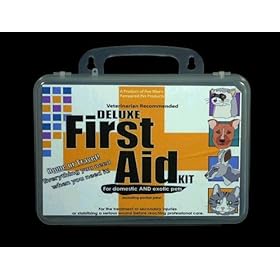
Here is a list of some articles that should be included in a First Aid Kit for your pet. They should be kept in a handy sealed container in the home or in the car. Don't forget to take it with you when traveling.

- Gauze pads (based on the size of your dog)
- Gauze rolls -not only to bandage but to possibly muzzle your dog
- Cotton balls
- Q-tips
- Blunt nose scissors -to cut away long hair and tape
- Tweezers
- Thermometer
- Adhesive tape -athletic type is the best
- Sterile water
- Alcohol (99% solution)
- Hibitane soap (4% solution)
- Hydrogen peroxide (3% solution) -to induce vomiting or cleaning wounds
- An old sock -to protect bandaged feet
- Cohesive flexible bandage -great for wrapping a wound and not having it pull hair like adhesive bandages
- Veterinary ointment for small wounds and burns
- Eye drops or ointment
- Ear cleanser and dryer
- Spoon or syringe for administering fluids
- Towel or blanket -serves many purposes: controlling temperature, transporting the pet, controlling the pet
- Zip lock bags -to contain urine or fecal matter -to keep bleeding paws from staining your clothes, etc.
- Quarters
- Your veterinarians name and phone number written down on a sheet with
- Your name and your dog's name written down as well. Any medications your dog usually takes.
- Other useful items to include are Maalox, Kaopectate, Pepto-Bismal and buffered aspirin. Never administer without first consulting with your veterinarian for the dosage and proper usage based on the needs and size of your dog.

Watch the expiry dates and replace when necessary for optimum effect of the medicines. And most importantly, remember self diagnosis is your worst doctor. When in doubt always consult with your local veterinarian.

Click here to try K9 KlearUp now!


------------------------------------------------- // ------------------------------------------------

Reprinted with permission by Terrie Simpson. Terrie has been involved in the dog world for over 28 years and has achieved numerous awards with her Springer Spaniels in tracking and obedience. Over that time, she has amassed a good amount of knowledge about how to keep a dog healthy. She is now happy to give back by sharing her experience with other dog owners.

Get the best of the canine world right to your inbox - Signup today for the K9Kourier weekly newsletter HERE and receive a FREE 41 minute MP3 download on "Natural Ways To Care For Your Canine".

Yellow Puppies Blogger Template | Template Design | Elque 2008