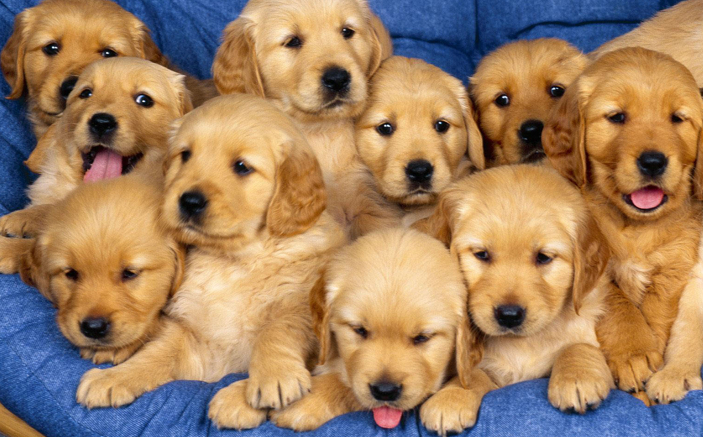
6 Ways to Know a Dog's Social Personality


Before acquiring a new dog or puppy, know your preferences when it comes to your new canine buddy’s friendliness level. Each breed of dog has its own common social trait. How friendly or how timid do you want your new dog to be? There are several ways you can test the sociability factor of a dog.
Here’s a simple test. If possible, take the healthy puppy or dog in a place free of distraction then try to talk or communicate to the puppy using affectionate words or whiny, gentle, and high pitched sounds. The reaction of the puppy or dog will somehow reveal a personality which will determine your interaction with your new pet. Check out the common responses that may classify dogs according to their temperament.
Energetic/ hyperactive dog

  • Cocks head to one side 
  •  Jumps all over you 
  • Wags tail, jumps to you, runs around 
  •  Nips your hand or legs 
  •  Makes yipping sounds

Calm and even-tempered dog

  •  Approaches you slowly and may turn away 
  •  May snuggle 
  • Starts out as alert but will not approach you
Responsive or interactive dog
  • Cocks head to one side 
  •  Ears move to show alertness 
  • May run towards you or jump on you 
  •  Playful

Timid dog

  •  Backs away or barks at you 
  •  May whine back with a timid look 
  •  Ears are directed backwards 
  •  Approaches you in a crawling or submissive position
  • May lick your hands

Aggressive and alpha personality

  • Growls and curls lips 
  • May lunge at you
  • Posture: ears erect, straight tail upward

Aggressive afraid

  • Growls and curls lips 
  •  defensive but submissive posture: tail down, crouching

 More tips for testing a dogs temperament on the video below.


6 Things to Seriously Consider Before Getting a Dog or a Puppy

Whether getting a new puppy or a full-grown dog, it is very important to know its background. Unless the dog is rescued out of nowhere and remains unclaimed in a deserted location, you have to know some information about your new canine buddy's past.

This short list will be very useful to those who wish to adopt or buy a dog for the first time or those who wish to get a dog again after a long period of dog-less lifestyle. The dog pound or the dog breeder can surely give you enough information you will need. Often, you will have to ask.
  1. feeding and diet or dietary concerns and preferences
  2. care and treatment of previous owner (Was the dog treated kindly or abused by previous owner?)
  3. breed or traits of parents (certain breeds have unique traits
  4. medical history
  5. vaccinations
  6. current living environment

Knowing these tidbits of information will help you understand the dog's behavior as well as help you anticipate the necessary adjustments as soon as the dog starts living with you. Most dogs will generally respond positively to a loving and caring home.

Even dogs who have been raised in poor breeding and training conditions will still be able to adjust to proper training from a loving and patient human.


image by bravor1x/pixabay.com

Housing and Bedding for New Puppies


Where is the best area to place a dog bed? When you have decided to bring home a puppy, the next thing to think about is place where your new canine buddy is going to live. This includes the type of dog bed that will be needed.

Dogs are loving companions and must be treated as family members who live with you in your house not someone who remains tied up 24/7 in an outdoor dog house. 

Many dog owners find the kitchen a most suitable place for dogs to stay. If a dog bed is not available yet, a cardboard box lined with a fabric such as an old towel or an old blanket would also be good enough. Make sure that the box and fabric are free of pointed objects such as staples, zippers and hooks. As soon as your budget allows, you may buy your dog a permanent bed which you can purchase from pet stores or through online shops.


It will be more economical to buy a dog bed that is adult sized. You will also need a blanket that can fit it the bed and warm your dog comfortably. It is also good to have at least two beds you can use interchangeably so that while the other is being washed, another bed can be used. 

You can also try using a canine duvet or a bean bag as the secondary dog bed. Remember to buy a cover for easier cleaning.

Let's Support Local Pet Adoption Centers

Many animals are abandoned by owners. Some of them probably ran away from their previous homes due to abuse or hunger cause by neglect. Some abandoned pets are still waiting for their owners who left them, without knowing that their humans will never arrive at all. It is for this reason, pet shelters and animal rescue centers were established.


The pet shelters are always looking for possible ways to acquire sponsors to fund their operations. Probably you have watched a video or two on YouTube or Facebook on animal rescue stories, some of these videos have moved you to take action. Most of these were produced by animal welfare organizations to raise awareness and support worldwide. These organizations provide the animals that are on their care the proper vaccination and treatment, and the right medication in order for these pets to heal and remain healthy while at their care.

If you feel like getting a pet, do consider going to the shelter first. Although some shelters require some fees when you adopt an animal, it is still so much less than buying a pet from a store. This way, you can give a pet a new lease in life by adopting him or her into your new home.


image courtesy of dan / FreeDigitalPhotos.net

Is Your Home Safe For Your Dog?


As threatening as a dog can at times prove to your living room, likewise the home can also be a lot more dangerous to a dog. Some pet owners have learned this the hard way, to their great hurt (and yet greater cost) throughout the years.

Death By Chocolate is not a peculiarly amusing concept in the canine world. Neither, for that matter, is death by slug bait, death by the perpetually lethal antifreeze, nor the rarer death by lead paint poisoning.

Whether you intend to take in a new dog into your household or you already have a dog in your home, the following safety measures will help ensure your pet's better health and happiness:

All medicines, supplements, herbal teas and other concoctions are potentially poisonous to canines and should be kept safely stored in closed cupboards or drawers.

Household cleansing agents and car additives, mainly antifreeze, should also be kept perfectly out of their reach.  The containers should be cautiously trashed of when emptied.

Blue boxes and other trash bins must be kept firmly covered every time.

Never place bugs, cockroach or rat traps where a dog can sniff them out.

Always leave a clean bowl of water out for your dog and discourage it from drinking from the toilet.  Also keep the toilet cover down. As an additional precaution, do not use automatic toilet bowl fresheners when you have pets around.

Never leave food around that could be fatal to a dog. This is particularly crucial in the case of chicken (brittle bones can stab a dog's stomach) and chocolate (which can lead to canine loss of sight and death).

For similar reasons, try to keep small, easily swallowed objects such as coins, toys and knick knacks safely out of the pet's reach.

Bundle up those oh-so-chewable electrical cords before treating them with a bitter-tasting spray, which is available via most petstores and vet's centers.

Some indoor plants and garden plants, can also be toxic to a dog.

© Athena Goodlight

Protected by Copyscape Plagiarism Tool

What is Dog Distemper?


Canine distemper ranks among the greatest perils to the world's dog population.  It primarily strikes young dogs, typically affecting those below one year old.  Among pups the mortality rate caused by distemper is around 80 percent.  The disease also attacks unvaccinated matured dogs. More than 50 percent of the full-grown dogs that get the disease die from it. And even if a dog does not die from distemper, its health could be permanently impaired.  Blindness in one or both eyes could result from discharges striking the cornea.  The same discharges sometimes leave the dog deaf or impair its sense of smell. Permanent damage to the nervous system may cause chorea (muscle twitching), convulsions, partial or absolute paralysis.

Canine Distemper is caused by an airborne virus.  It could be picked up by the dog that comes in contact with mucus and watery secretions from the eyes and noses of contaminated dogs, and also from contact with these dog's urine and feces.  A healthy dog can be infected with distemper even without direct contact with the infected animal. Kennels, runs, bedding and practically everything touched by a dog with distemper could spread the infection—this includes the hands, feet, and garments of the person handling the sick dog.

Read more on Canine Distemper:  Canine Distemper: Symptoms and Treatments

Working Dogs: Giant Schnauzer


image via Wikipedia
The Giant Schnauzer is the largest of the three Schnauzer breeds. Cattlemen in Southern Bavaria produced the Giant Schnauzer by breeding medium-size Schnauzers with smooth-coated sheep and cattle dogs, with later crossbreeds to rough-haired sheepdogs and black Great Danes. A a time it was known as the Munchener and was prized as a superb cattle and driving dog. It closely resembles the Standard Schnauzer but a bigger and more powerful variant.


WEIGHT: 65-85 pounds

HEIGHT: Males 251/2-271/2 inches; females 23 1/2-25 1/2 inches

COLOR: solid black; pepper and salt.


© Tip Writer

Working Dogs: Standard Schnauzer


The Standard Schnauzer is a medium-sized dog, the oldest breed of the three Schnauzer types. Possibly a result of the crossbreeding of the black German Poodle and Gray Wolf Spitz with Wirehaired Pinscher ancestry, the Standard Schnauzer served as a guard and watchdog in Germany since the 16th century. It is also skilful as a rat catcher in the stable area. Its head is long, rectangular, and robust with a blunt whiskered muzzle.  Its body heavyset and squarely built. Its oval eyes dark and shadowed by bristling eyebrows. The V-shaped ears are small and carried upright when cropped, and the coat is hard and wiry.

WEIGHT: 30-40 pounds

HEIGHT: males 18 ½ -19 ½ inches; females 17 ½ – 18 ½ inches

COLOR: pepper and salt or pure black.


image credit


© Tip Writer

What Should You Look For When Buying a New Puppy?


If you are now ready to take in a new pet dog, here are some pointers to help you choose your new pet puppy.

Visit only reputable dog breeders and ask to see as many puppies as you possibly can. Find a puppy with good temperament aside from its good physical condition because you'll be living with your dog for many years.  It is crucial to know lineage of the puppy you plan to adopt or buy. If it's possible, see and observe the parents of the puppy yourself; observe their friendliness, their energy, and their condition. Inquire if they are easy to train and how they behave around the house.  Genetic traits are important to observe.

Ask to see the whole litter at a time if possible. This may be understandably overwhelming, seeing all frisky little balls of fur.  Check which one is smartest puppy and to which would you like the most. It can be difficult to tell.  Sometimes the friendliest ones may not necessarily be the strongest friend in the long run. One may be an absolute little troublemaker, some others are reserved and coy. Curiosity has long been considered a fairly good measurement of intelligence, yet it isn't a definite guide in gauging the very young pup.
image credit
The chief factor, then, is to find a puppy of excellent lineage and one with visible healthy energy. The healthy puppy is cheerful but not nervous or hyperactive. Check for clean and bright eyes clean, the coat should be shiny, the nose has clean from any mucous discharge, and with healthy-looking skin. The dog's ears should be responsive responds when you talk to him or if you make a sound. The low-spirited, cowering pup should not be immediately disposed as mentally retarded.  It may not be feeling well due to, possibly, a needed worming or medication. If you feel a fondness on a puppy of this type, it is advisable not take him yet. Instead, ask the breeder to get him in tip-top condition, and then visit him later.

It can be very discouraging to be forced to medicate a puppy the moment you take him home. It should not be necessary, and it will not be when you insist on a dog with perfect health upon buying the puppy. Perfect health implies two things: that the puppy is in good health at the present moment, and that he has not been exposed to whatsoever disease or form of infection which could break out in a few days.

Everything else depends on taste entirely. Other people favor a dog with a long tail, others opt for a dog with a short one. Some like upright ears, some like droopy ears. Some want long fur, some short, while larger sizes appeal to many, and the average and toy sizes to other people. Fur color choice also depends on taste, and there is a great deal of shades from which to choose from.

Think of creating a list of your preferences in a dog, then research on diverse dog breeds. See if you could find one which meets your tastes. In the end, the pet that will please you is the one you wish for. This will be your friend and pet whom you'll live with for the next decade or so. Acquire the pet whose appearance delights you; do not allow anybody to decide for you. And remember that size, sex, and fur type will dictate, to an extent, the kind of pet care you should give.


Protected by Copyscape DMCA Copyright Search

Yellow Puppies Blogger Template | Template Design | Elque 2008