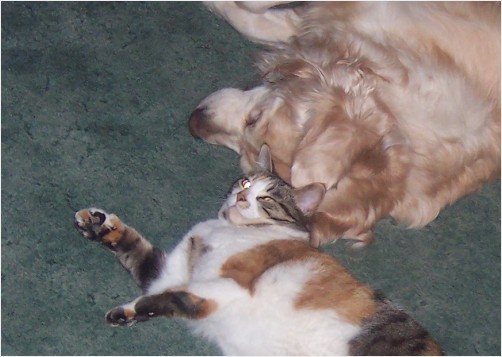
Introducing a Cat to Your Dog
| image source |
Labels: cats, dog and cat, dog care, dogs, dogs and cats, kitten, pet care, puppy
Canine Separation Anxiety: Is Your Dog Too Attached to You?
Dogs are by nature social animals, they're pack animals. Like infants that develop a bond to their mothers, dogs, too, develop a very strong attachment with their canine female parents. These puppies would only prefer to be with their turf, where the female parent or father can defend them or supply food through the female dog's mammary glands. But once this canine family bond is dissolved, the dog instantly turns its attention to their owner or caretaker...READ MORE>>>
Labels: dog anxiety, dog attachment, dog care, dog habits, separation anxiety
Brief Guide to Dog Surgery
Dog surgery pertains to any canine veterinary operation. It ranges from minor surgery, which usually only requires a few stitches, to major surgery, which involves medical solutions to multiple body organs.
One of the most common types of dog surgery is cataract surgery. Just like humans, dogs are also subject to complications in vision and blindness. A dog with cataracts gradually loses its eyesight. A palpable symptom of canine cataract is change in color of the dog's pupils. The eyes develop small spots that are either blue or gray in color. In terms of movement, a dog with cataracts tends to look lethargic. It walks uncomfortably and easily bumps into things.
The solution to cataracts is of course, a surgery. During a cataract surgery, the veterinarian removes the lens of the dog and replaces them with artificial substitutes. Cataracts in dogs are caused by consistent exposure of eyes to foreign objects. Just like in humans, the chances to have cataracts among dogs also depend on their genetics.
Read more: Brief Guide to Dog Surgery
Labels: dog care, dog surgery, dogs, pet care, veterinarian
Dog Food Allergies - How to Treat the Problem
------------------------------
Dog food allergies are rather difficult to distinguish from other allergies like atopy, etc., because the symptoms of food allergies tend to be similar to the symptoms of the other allergies.
SYMPTOMS
Despite there not being one outstanding symptom that would point us in the direction of food allergy, which makes diagnosis very difficult, there are some symptoms that have been identified as being related to a dog's food allergy.
Symptoms tend to vary from case to case but I have listed some that have been identified as symptoms displayed by a dog with a food allergy:
o Dry, flaky skin
o Hair loss
o Itchy skin, feet and paws
o Persistent skin infections/ hot spots
o Persistent ear infections especially yeast infections
o Constant vomiting
o Frequent bowel movements
o Skin rashes and hives
Other symptoms like flatulence, sneezing, changes in behavior patterns and asthma can also indicate food allergies.
CAUSES
Research has shown that some dog food ingredients could be the cause of a dog's food allergies, such as corn, dairy products, beef, eggs, wheat, chicken and soy; all common dog food ingredients by themselves.
Dog allergies are most often caused by the consumption of the same food for several years. These allergies tend to manifest themselves quite suddenly, irrespective of the fact that the dog has been eating the same thing for years. Detecting the actual cause of the dog's food allergy can be both a frustrating and time consuming exercise, but here's what you can do...
SOLUTION
Exclusion diet: this is probably the most effective way to find out the cause of a food allergy.
One source of protein is used for up to 12 weeks to see if the dog's condition improves. After that, new ingredients are added (every seven days) one at a time until the problem returns so you can identify the ingredient that was causing the food allergy. This is a very slow and painstaking method but it is effective.
Make sure that you use a protein source that your dog has not been previously been given, such as tofu, venison, fish, lamb or rabbit, making sure that the digestibility percentage is at least 85%. Try to avoid additives as much as possible. Combine the protein source with a carbohydrate; one example would be lamb and rice.
A vet can give medication to help cope with the allergy and can administer a blood test to try and figure out the ingredient causing the allergy. However, such tests are not very accurate as a diagnostic tool and an exclusion diet is usually the best way to go about it.
To help relieve exterior symptoms, I suggest you consider using an all-natural product.
Tip: using distilled water or boiled tap water that has been refrigerated will help to avoid the chlorine content in the water, which is a possible factor.
PREVENTION
There is no quick fix for dog food allergies. It is up to you to find out the ingredient that is causing the allergy and eliminate it from your dog's food. Once you have identified the food ingredient(s) to which your dog is allergic and removed them from your dog's diet, the allergy should clear up quickly enough. Don't forget to keep a diary to record the elimination process - this is crucial to helping your dog get rid of its food allergy.
--------------
Brandon Roe is the developer of www.K9KlearUp.com, the world’s only all-natural dog balm that helps clear up the 17 most common canine skin and coat problems... Guaranteed or your money back.
Signup today for Brandon’s weekly K9Kourier newsletter and get all the best from the canine world sent right to your inbox - Want Great Weekly K9 News?
The K9 Kourier Weekly Ezine
Your Source of Free Quality K9 Info . Signup today and receive a special free gift.
Labels: dog care, dog diet, dog food, dos allergies, pets